The U.S. Food and Drug Administration’s (FDA) Center for Drug Evaluation and Research division has just completed their research on sunscreen chemicals. Their findings: Seven of the most commonly used chemicals in sunscreen (including known endocrine disrupting chemicals) are, in fact, absorbed by the skin and enter the bloodstream–and when they do, they exceed safety thresholds.

Chemical Watch Blog
Soybean Oil Linked to Obesity and Neurological Problems
New research findings have revealed a dirty secret in this widely used industrialized food additive: Soybean oil can not only lead to obesity and diabetes in some people (something that has been suspected for some time), but it also appears to have the potential to trigger neurological problems–which could potentially lead to conditions like autism, Alzheimer’s disease, anxiety, and depression.
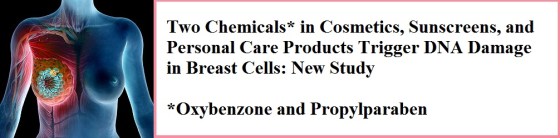
Personal Care Product Chemicals Trigger Breast Cell DNA Damage
There are distressing results from a new scientific study focusing on the adverse health effects from chemicals commonly found in cosmetics and personal care products: At least two of these chemicals have now been shown to damage the DNA of breast cells–even at low doses.
BPA Triggers Allergic Asthma that can Last for 3 Generations
New research examining BPA has discovered that its ability to trigger allergic asthma in some people could last for as long as three generations.
Flame Retardant Exposure During Pregnancy Linked with Reading Problems in Children
The results of a current scientific study indicate that the children of mothers exposed to flame retardants during their pregnancy have an increased risk for the type of cognitive deficits that lead to reading problems.
Biggest Chemical Threat to Intellectual Disability: Flame Retardants, Pesticides
A new scientific study just released examined the extent of IQ loss linked to toxic chemicals over a 15 year period in the U.S. Flame retardants and pesticides, and to a lesser extent, heavy metals like lead, resulted in more than a million cases of intellectual disability in the United States between 2001 and 2016. As a result of significantly fewer restrictions, flame retardants and pesticides now represent the bulk of that cognitive loss.
Lead Exposure Linked to Lower Brain Volume, Cognitive Problems in Teens
A new scientific study has demonstrated that living in neighborhoods with high risks of lead exposure is associated with differences in brain structure and cognitive performance in some children and adolescents.
In a Heartbeat: Food Chemical BPS Hinders Heart Function within Minutes of Exposure
The results of a new scientific study researching potential health effects to the industrialized food additive BPS (BPA’s counterpart replacement for lining food and beverage containers in the U.S. food supply) BPS can hinder heart function within minutes of a single exposure.
How Phthalate Chemical DEHP Triggers Birth Defects, Infertility Uncovered
A new scientific study has revealed the process by which the common phthalate chemical DEHP (used to make plastic flexible) triggers birth defects, miscarriage and male infertility.
Highly Processed Foods Again Linked with Obesity, Disease
Additive laden, highly processed foods–or more accurately, “non-food foods” where the amount of synthetic or industrialized chemical additives significantly outweigh the amount of natural whole food ingredients–have once again been linked with rising U.S. obesity and disease rates.