
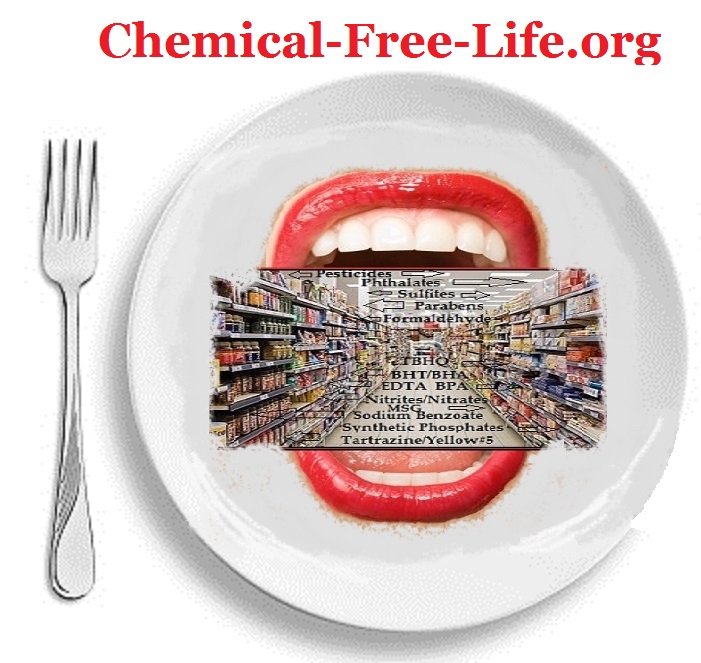
A recent scientific study has found a link between artificial sweeteners and depression, and between diets of highly processed foods and diabetes, high blood pressure, and elevated cholesterol and fat levels.

Targeting chemicals of concern in our food, products and environment and offering cleaner, better solutions. Chemical-Free Life… utilizing scientific research, public education and science-based wellness programs to help consumers live cleaner, healthier lives.
A recent scientific study has found a link between artificial sweeteners and depression, and between diets of highly processed foods and diabetes, high blood pressure, and elevated cholesterol and fat levels.

In a new re-evaluation of the health effects of food chemical BPA, European Health Safety Experts (EFSA) have concluded that dietary exposure to bisphenol-A (BPA) is a health concern for consumers across all age groups. EFSA’s experts identified potentially harmful health effects of BPA on the immune system.

The results from a new scientific study suggests that nitrite food additives (such as sodium nitrite) that are added to processed meats and other processed foods appear to be linked with an increased risk for type 2 diabetes.

A new study has found a link between toxic chemicals in air pollution and serious health issues. Air-pollution-related disease, death and IQ loss occurred in every city and town studied, regardless of demographics or income level.

Bumble Bee brand is recalling its smoked clams after tests by the Food and Drug Administration revealed harmful levels of PFAS. chemicals.

New research demonstrates how chronic arsenic exposure may contribute to the development of Type 2 diabetes.

A new scientific longitudinal study has revealed PFAS “forever chemicals” may increase the risk of type 2 diabetes in Latino adolescent girls.

Pregnant females exposed to PBDE chemicals can pass the chemical to babies in the womb and during breastfeeding. Then, when those babies grow up, they may develop diabetes–long after the time they were initially exposed.

After reviewing hundreds of peer-reviewed scientific studies researches have concluded that a growing number of chemicals in pesticides, flame retardants, and certain plastics have been linked to widespread health problems including infertility, diabetes, and impaired brain development. Exposure to certain chemicals found in industrial and household goods has also been linked in new studies to obesity; to endometriosis, a painful and abnormal growth of tissue on the outside of the womb; and to polycystic ovary syndrome, a significant cause of infertility.

The microbes that inhabit our bodies are influenced by what we eat, drink, breathe and absorb through our skin, and most of us are chronically exposed to natural and human-made environmental contaminants. In this study, scientists reviewed the research linking dozens of chemicals present in our personal care products, home care products, general environment and our food to changes in the gut microbiome and associated health challenges.
 Chemical Free Life