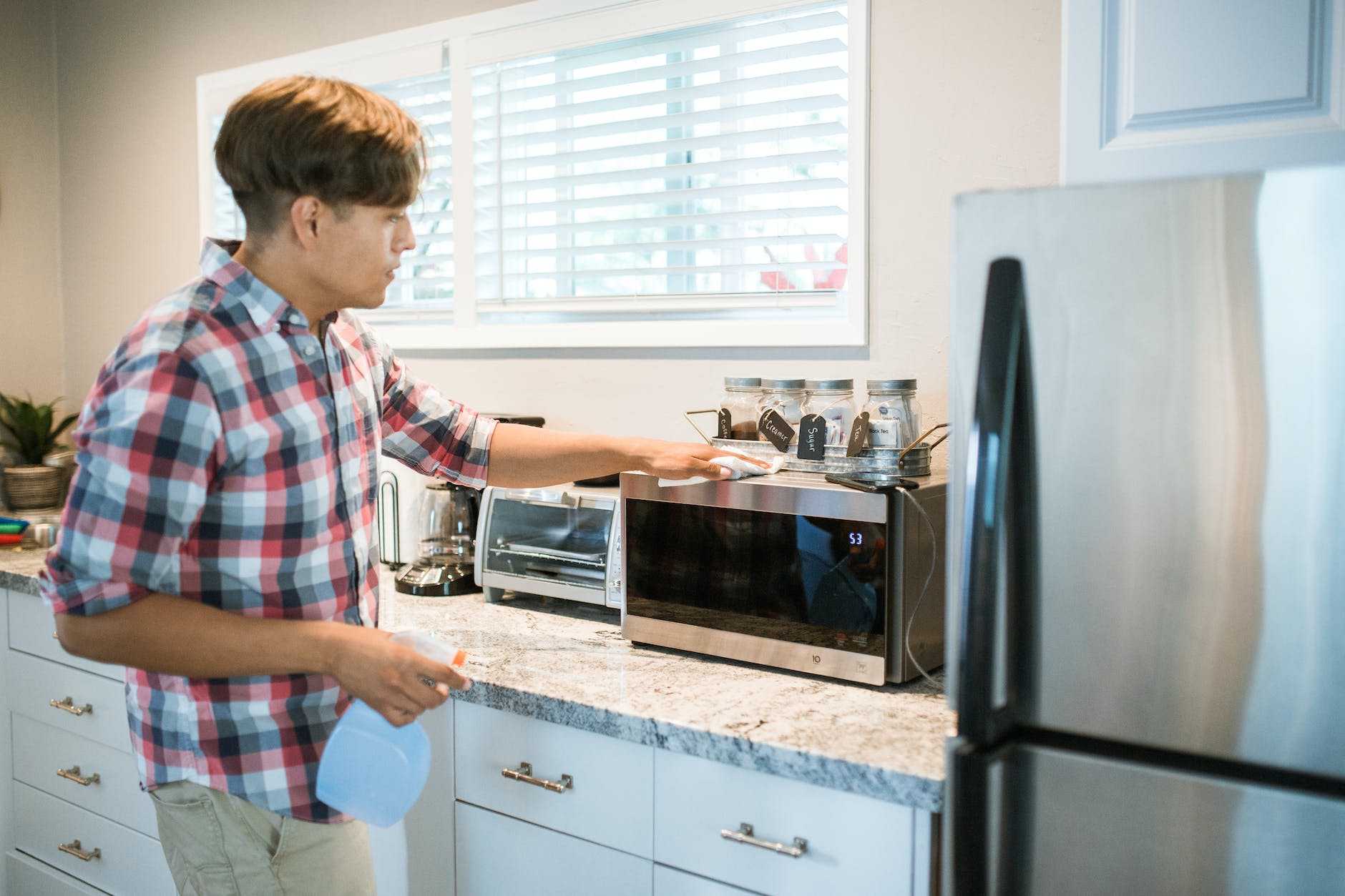
If you have a habit of microwaving food and drinks in plastic food containers or reusable food pouches, you may want to rethink that practice. A new scientific study has discovered that microwaving plastic food containers and pouches causes microplastics and nanoplastics to migrate from the containers into the food and drinks. This is especially problematic for food and drinks served to babies and children, but as the study also found that the microplastics killed off kidney cells, it is a dangerous practice for older children and adults as well.
.
Study overview
Scientists conducting the study investigated the release of microplastics and nanoplastics from plastic containers and reusable food pouches under different usage scenarios, using DI water and 3% acetic acid as food simulants for aqueous foods and acidic foods. The results indicated that microwave heating caused the highest release of microplastics and nanoplastics into food compared to other usage scenarios (such as refrigeration or room-temperature storage). It was found that some containers could release as many as 4.22 million microplastic and 2.11 billion nanoplastic particles from only one square centimeter of plastic area within 3 min of microwave heating. (Refrigeration and room-temperature storage for over six months can also release millions to billions of microplastics and nanoplastics.) Additionally, the polyethylene-based food pouch released more particles than polypropylene-based plastic containers. Exposure modeling results suggested that the highest estimated daily intake was 20.3 ng/kg·day for infants drinking microwaved water and 22.1 ng/kg·day for toddlers consuming microwaved dairy products from polypropylene containers. Furthermore, an in vitro study conducted to assess the cell viability showed that the extracted microplastics and nanoplastics released from the plastic container can cause the death of 76.70 and 77.18% of human embryonic kidney cells (HEK293T) at 1000 μg/mL concentration after exposure of 48 and 72 h, respectively. (source)
.
Study specifics
Scientists conducted experiments with two baby food containers made from polypropylene and a reusable pouch made of polyethylene, both plastics approved by the U.S. Food and Drug Administration. In one experiment, the researchers filled the containers with either deionized water or 3% acetic acid — the latter intended to simulate dairy products, fruits, vegetables and other relatively acidic consumables — then heated them at full power for three minutes in a 1,000-watt microwave. Afterward, they analyzed the liquids for evidence of micro- and nanoplastics: the micro being particles at least 1/1,000th of a millimeter in diameter, the nano any particles smaller.
The actual number of each particle released by the microwaving depended on multiple factors, including the plastic container and the liquid within it. But based on a model that factored in particle release, body weight, and per-capita ingestion of various food and drink, the team estimated that infants drinking products with microwaved water and toddlers consuming microwaved dairy products are taking in the greatest relative concentrations of plastic. (source)
.
Solution
Remove food and drinks from plastic containers and pouches and put on/in glass containers before microwaving.
.
Journal reference: Kazi Albab Hussain, et al. Assessing the Release of Microplastics and Nanoplastics from Plastic Containers and Reusable Food Pouches: Implications for Human Health. Environmental Science & Technology, 2023, 57, 26, 9782–9792. Publication Date: June 21, 2023.
Eric
 Chemical Free Life