
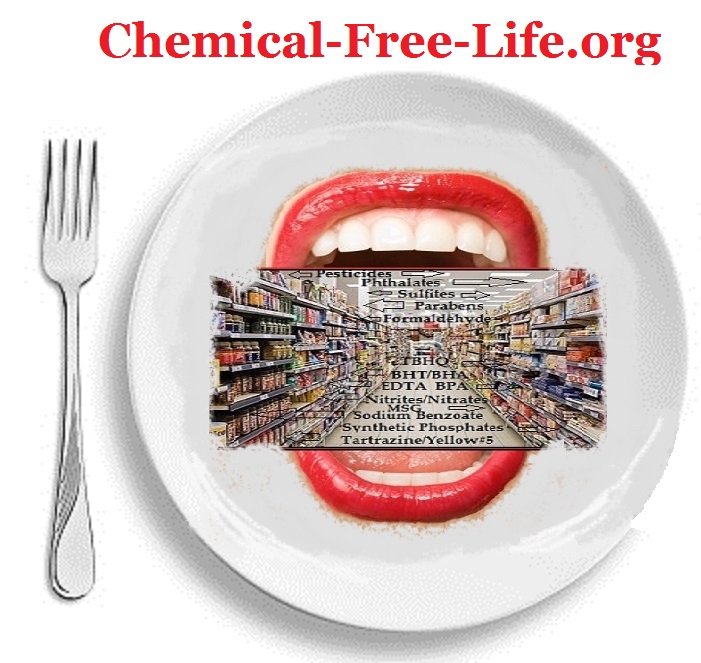

We have been sounding the alarm about food additives of concern like endocrine-disrupting BPA (bisphenol-A) since the 1980’s. There have been a multitude of peer-reviewed scientific research studies published on BPA and other additives of concern for decades. During all of that time there have been several petitions and lawsuits filed against the the U.S. Food and Drug Administration (FDA) to try and compel them to reexamine the safety of these chemicals of concern in our food. And during all of this time, the FDA has ignored the scientific findings and the legal proceedings. Now, however, the FDA says that “emerging research” has led them to reexamine the health concerns surrounding food additives like BPA* and PFAS**. One possible reason for the change in perspective is the recent widespread media coverage and public engagement over the state of California’s consideration of banning several widely used food additives the state believes are a public health threat. Another possible reason behind this change of perspective is the fact that the European Union (EU) has recently declared BPA as a health threat to consumers. As for PFAS, the U.S. Environmental Protection Agency (EPA) has officially recognized that the chemicals are in U.S. drinking water and that they pose a health threat to consumers. It is difficult for the FDA to continue to maintain it is OK for PFAS chemicals to make an appearance in U.S. food containers (especially since they confirmed back in 2019 that PFAS does, indeed, leach from the containers into the food ), when another U.S. agency has taken the position that the same chemicals pose a danger in drinking water.
Food additives of concern to have an FDA reevaluation: In early July, 2023, the FDA indicated that it will finally conduct a food safety review to address concerns over a growing list of chemical food additives***, including BPA and PFAS. The FDA says it is evaluating food chemicals and additives based on emerging research that suggests a substance may be carcinogenic, unsafe for human consumption, or may lead to other health side effects.
If evidence indicates a food additive is unsafe, the FDA may take further action, which could include a wide range of responses, from issuing safety alerts, to conducting recalls, or even revoking approval of the food additive for some or all uses.
The agency did not give insight as to how it will conduct the review process or when the process for certain chemicals will be completed, and as of now, has not issued a full list of chemicals and additives under review. (source)
–
*Bisphenol-A (BPA), a known endocrine-disrupting chemical, is widely used in the production of polycarbonate plastics and epoxy resins. BPA has been classified by the U.S. Food and Drug Administration (FDA) as a food additive because it comes into contact with food; food producers and packagers use the chemical in the inner lining of canned food and plastic food and drink containers. Developed in 1891 as a synthetic estrogen, BPA came into widespread use in the 1950’s when scientists realized it could be used to make and strengthen polycarbonate plastic and some epoxy resins to line food and beverage cans. In recent years BPA has been found in scientific testing to leach into food by way of cans (canned food), the lids of canning jars, and plastic food and drink containers. BPA has also been detected in dental fillings and some thermal paper cash register/ATM receipts.
BPA is linked in scientific and medical studies with adverse health consequences: Primarily used as an industrial food packaging chemical, BPA has been found to leach into the food and has been linked in numerous peer-reviewed scientific studies to a variety of adverse health outcomes. Like other food chemicals of concern, BPA makes an appearance on U.S. grocery shelves with no packaging warnings to consumers—a fact that scientists and food safety advocates have taken issue with because numerous peer-reviewed studies conducted by independent scientists have linked exposure to BPA to a variety of adverse health consequences. Among the health outcomes that have been linked with BPA are an increased risk for endocrine-related cancers including breast cancer and prostate cancer, spikes in blood pressure, heart disease, abnormalities in liver function, low sperm counts in men, metabolic abnormalities, weight gain and increased serum cholesterol levels, neurological damage/altered brain development including a link with schizophrenia, abnormal puberty advances, disruptions, and abnormalities, insulin resistance and diabetes, adverse reproductive and developmental effects including recurrent miscarriages, and gynecomastia (a male breast disease that causes abnormal breast growth in boys and men). Perinatal exposure to BPA has recently been linked to an increased risk of food intolerance in adulthood.
BPA appears to be pervasive in the bodies of people living in the U.S. Researchers at the Centers for Disease Control and Prevention (CDC) found BPA to be present in the urine of 95 percent of Americans tested, and other studies have detected BPA in the breast milk of nursing mothers, and with prenatal exposure, where testing detected BPA in the biological fluids and placenta, as well as the urine and umbilical cords of newborns.
–
**PFAS chemicals (per- and polyfluoroalkyl substances) are toxic to humans, animals and the environment. They are comprised of approximately 14,000 human-made chemical compounds. The chemicals are ubiquitous in the U.S., appearing in thousands of consumer and industrial products and are typically used to make products resist water, stains and heat, including household products (like carpeting, curtains, furniture upholstery, waterproof and stain-resistant flooring, etc.), cooking supplies (including cooking utensils and bake ware), clothing, personal care products (like cosmetics, including waterproof mascara, dental floss, contact lenses and feminine hygiene products) and even food (PFAS appears in processed food packaging for humans and pets), pharmaceuticals like Prozac, and public drinking water (tap water) that affects an estimated 2 million Americans. PFAS chemicals are usually found in products labeled “stain-proof” and “waterproof”. PFAS chemicals also appear in fire-fighting foam and other industrial products used at airports and military bases across the country, where the chemicals have leached into the groundwater. PFAS chemicals are known as “forever chemicals” because they do not readily break down in the environment or human body. PFAS chemicals have been linked in scientific and medical studies to a variety of serious health conditions including cancer (which includes testicular and kidney cancers), kidney disease, heart disease, thyroid problems, reproductive problems, endocrine problems (PFAS has been found to disrupt hormonal functions with some research suggesting that the PFAS chemicals are linked to accelerated ovarian aging, period irregularities and ovarian disorders like polycystic ovarian syndrome) and liver problems. Some newer PFAS have been found to accumulate in organs, so in some cases, science simply cannot detect the toxic chemicals when testing for it in blood.
–
***Red Dye 3, Brominated Vegetable Oil (BVO), and nanoparticle white food coloring additive Titanium Dioxide are also on the FDA list to reevaluate.
Eric
 Chemical Free Life